
For many years, the interpretation of San rock art in southern Africa has been shaped by the work of scholars such as Patricia Vinnicombe, David Lewis-Williams, Aron Mazel and, more recently, Sam Challis. Among a newer generation of researchers, Ghilraen Laue has made a significant contribution by exploring aspects of San rock art that extend beyond symbolism and trance. Her work has focused on regional identity, landscape, heritage management and the ways in which different San communities expressed themselves through art.
Laue’s research begins with an important observation: while San communities across southern Africa shared many beliefs and practices, they were not culturally identical. This may seem obvious, yet for many years, rock art was often interpreted through broad explanations that emphasised similarities rather than differences. Laue has argued that regional variation deserves greater attention and that different communities developed distinctive artistic traditions while remaining part of a wider San cultural world.
This idea formed the basis of her doctoral research in the Groot Winterhoek Mountains of the Eastern Cape. Through a detailed study of paintings, subject matter and artistic conventions, she demonstrated that local traditions can often be recognised within the archaeological record. Her work suggests that artistic knowledge was learned and transmitted within particular social groups, creating what archaeologists refer to as “communities of practice”. These communities shared techniques, styles and ways of representing the world around them.
The implications for the Maloti-Drakensberg are considerable. The paintings found in areas such as Cathedral Peak, Kamberg, Giant’s Castle and the Southern Berg may all reflect common San beliefs regarding trance, rainmaking and the spirit world, but they may also contain elements that are unique to particular communities and landscapes. This approach encourages a more localised understanding of rock art without losing sight of the broader San worldview.
Another area in which Laue has made an important contribution is the relationship between rock art and landscape. In collaboration with Geoffrey Blundell, she has explored how painted shelters formed part of larger cultural and spiritual landscapes. Their work argues that San artists did not simply choose shelters because they offered suitable surfaces for painting. Many of these places already possessed significance within San understandings of the world.
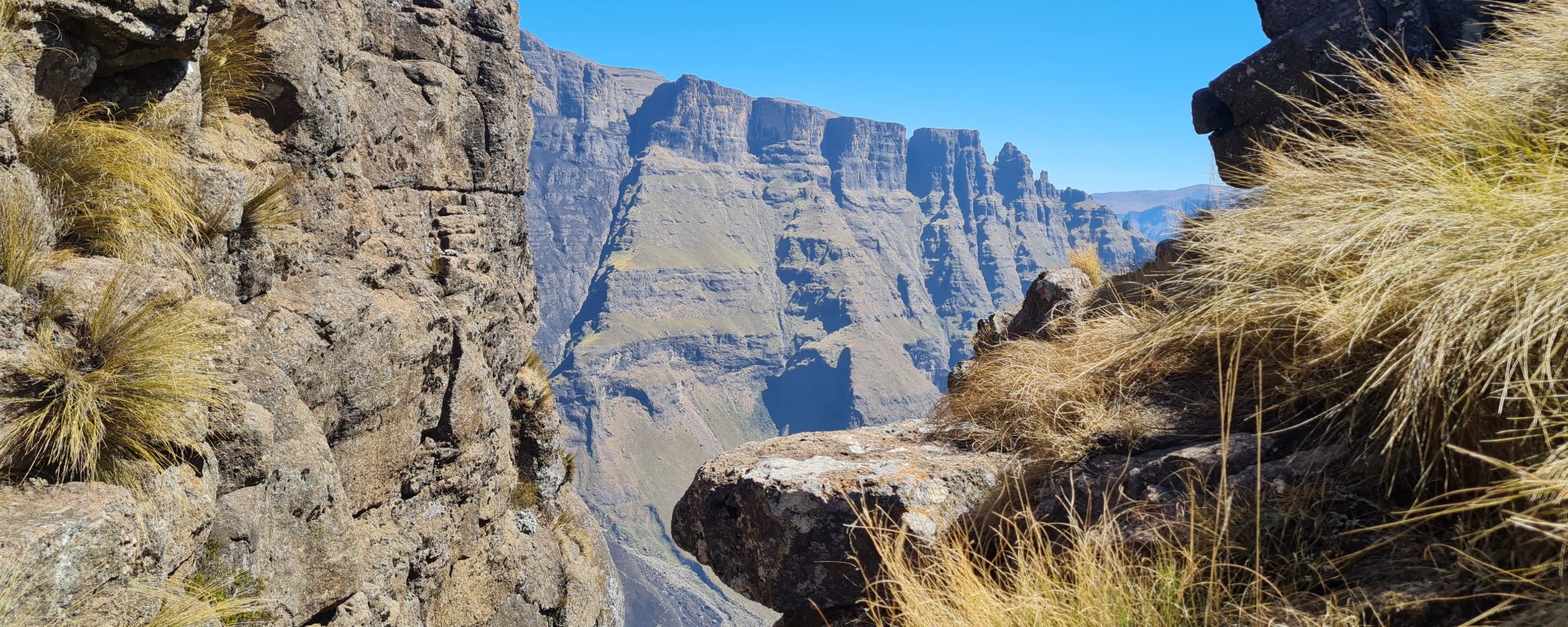
This perspective is particularly relevant in the Drakensberg. Anyone who has spent time in the region’s painted shelters will appreciate that many occupy extraordinary locations. Shelters are often found beneath towering cliffs, overlooking valleys, beside waterfalls or deep within secluded gorges. The setting itself appears to have been an important part of the experience. The paintings, the shelter and the surrounding landscape may all have contributed to a single system of meaning.
Laue has also been involved in discussions surrounding the management of rock art sites within the Maloti-Drakensberg World Heritage Site. Together with Sam Challis and Alice Mullen, she examined the challenges facing the conservation and interpretation of this remarkable cultural resource. Their work highlighted the need for stronger recognition of cultural heritage alongside biodiversity conservation and called for greater involvement of local communities in the protection and presentation of rock art.
These arguments resonate strongly in the contemporary Drakensberg, where increasing attention is being given to cultural tourism, local custodianship and the interpretation of heritage sites. The authors argued that rock art should not merely be protected; it should also be understood, interpreted and shared in ways that benefit both local communities and visitors.
One of the more intriguing aspects of Laue’s recent work concerns the relationship between sound and rock art. Although she was not the first scholar to investigate this topic, she has helped develop and test ideas that were initially proposed by Aron Mazel.
Mazel’s study of Didima Gorge drew attention to the extraordinary concentration of paintings within the gorge and explored whether its acoustic qualities may have contributed to its significance. Harald Pager documented almost 3,900 paintings in just seventeen shelters within Didima Gorge, making it one of the most important concentrations of San art in the Drakensberg. Mazel noted earlier observations linking the name “Didima” to reverberating and echoing sounds and suggested that the acoustic character of the gorge may have been meaningful to the San people who used it.
Anyone who has walked through Didima Gorge during summer thunderstorms can appreciate the dramatic effects of sound in this landscape. Thunder reverberates between the cliffs, echoes carry across the valley, and the gorge itself creates a powerful sensory experience. Mazel proposed that such qualities may have formed part of the area’s spiritual significance.
Laue’s later work approaches the subject from a broader perspective. In a recent archaeoacoustic study conducted in the Kamberg and Giant’s Castle regions, she and her colleagues examined whether acoustic properties consistently influenced the placement of painted shelters. Their findings suggested that while sound may have been important at some sites, it cannot by itself explain the distribution of rock art across the Maloti-Drakensberg.
Instead, the study pointed towards a more complex relationship between people, place and belief. Acoustics may have contributed to the significance of certain locations, but they formed only one part of a wider cultural landscape that included topography, spirituality, memory and social practice. Taken together, Ghilraen Laue’s work has broadened our understanding of the San rock art of the Maloti-Drakensberg. Her research encourages us to look beyond the painted images themselves and to consider the communities that created them, the landscapes in which they lived and the meanings attached to particular places. In doing so, she has added an important dimension to the study of one of South Africa’s greatest cultural treasures.
For those who spend time exploring the painted shelters of the Drakensberg, her work offers a useful reminder that every site has its own story. The paintings may reflect shared San beliefs, but they were created by real communities living in particular landscapes, each with its own traditions, histories, and relationships with the surrounding mountains.
Site Map Interpreting San Rock Art | The Origin of the Drakensberg San | History of the Drakensberg San | Contributors to Drakensberg San Rock Art and Lifestyle Interpretation | Status of the Drakensberg San | Drakensberg San Religion | Dating Drakensberg San Rock Art | Social Organisation of the Drakensberg San