
An introduction to the Geology of the Drakensberg
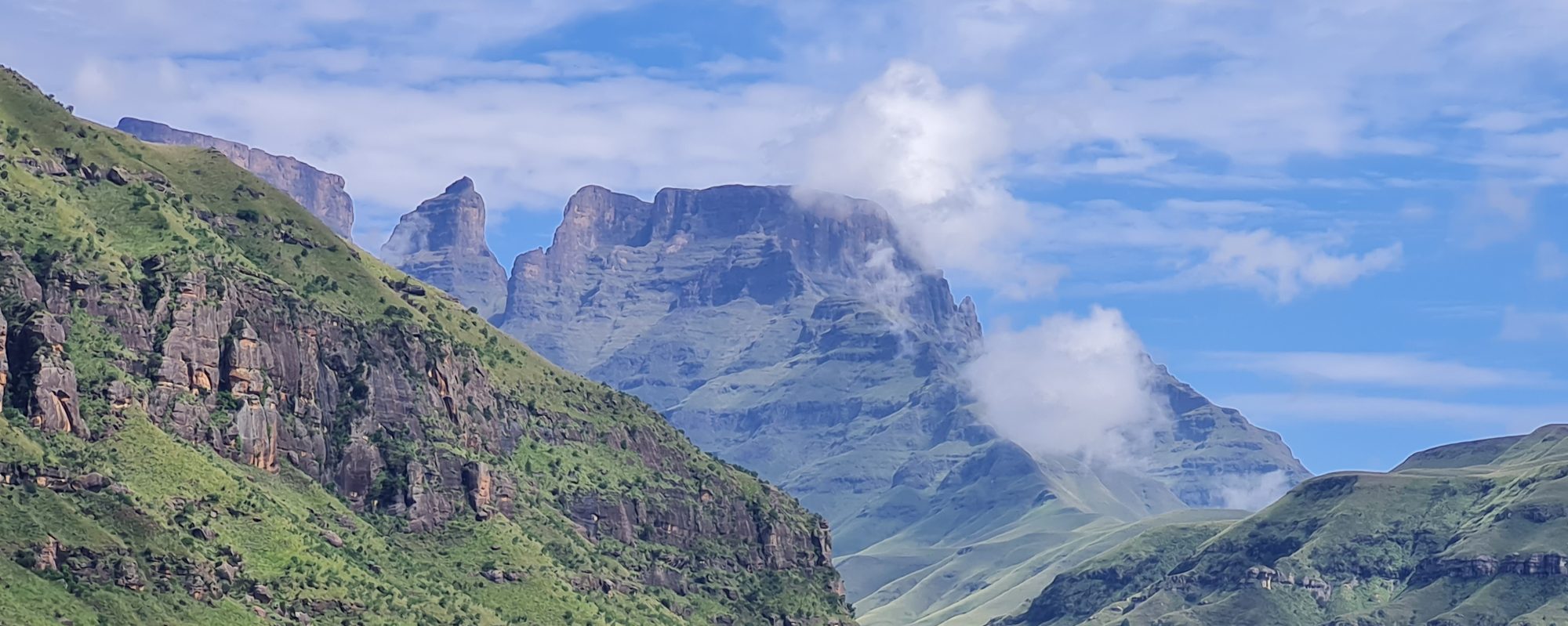
An extended period of sedimentation, volcanic flow, massive continental upliftment, rifting and ultimately the erosion of the thick basalt cap defined Drakensberg’s geology. As a result, this escarpment is one of the world’s best examples of an erosional mountain.

Water-driven sedimentation
The lowest layer of the Drakensberg is the Molteno group of deposits, established some 240 to 220 million years ago in the Late Triassic geological period. A sedimentary layer of approximately 450 metres thick in this region. It comprises sandstone and shale layers rich in insect and plant fossils, which reflect lush riverine or swampy vegetation over what we then knew as Gondwanaland. This supercontinent existed for about 450 million years, from about 450 million years ago until some 200 million years ago.
The Elliot Formation followed this layer some 220 to 200 million years ago, or the Late Triassic to earliest Jurassic period. A layer of mudstones on what was a semi-arid floodplain. Dinosaur fossils have also been found in this layer.
Wind-driven sedimentation
Wind-driven reddish fine sand deposits from an arid period over Gondwanaland followed the Elliot period. The Clarens Sandstone Formation was a narrower layer. It was established over 200 – 183 million years ago in the early Jurassic period. This band is up to 90 metres in thickness. A softer yellow aerial deposit followed, sometimes called the Cave Deposits or Cave Formations, which was formed from 183 million to 179 million years ago in the early Jurassic period.


The Gondwanaland split
Around 180 million years ago, at the onset of Gondwana’s breakup, huge volumes of basaltic lava erupted, covering much of what is now southern Africa. These basalts form a thick cap over older sandstone (e.g., the Clarens Formation) and are well exposed in the Drakensberg region.
The supercontinent Gondwana began to fragment in the Early Jurassic (~180 Ma), gradually breaking apart into the continents we recognise today (Africa, South America, Antarctica, India, Australia, etc.).
In the Drakensberg region, tectonic uplift combined with rifting and subsequent E-flowing rivers in the elevated terrain initiated significant erosion. The stepped escarpment, basalt cliffs and deep valleys result from differential erosion of the resistant basalt cap over more erodible underlying sandstone and sedimentary units. Long-term escarpment retreat has occurred, although actual measured retreat rates for the eastern escarpment are in the order of tens of metres per million years rather than metres per year.
As a result of these long-term processes, the present escarpment stands inland from its original rift margin, and the landscape of the upper Drakensberg (high basalt-capped peaks and cliffs) and the lower Drakensberg/valley systems reflect this complex interplay of volcanism, tectonics and erosion.
