|
Drakensberg Times: Spring 2026
Copyright: James Seymour, Cathkin Booking and Management Services |
| |
|
“Blossom by blossom the spring begins." — Algernon Charles Swinburne |
| |
|
Contents:
- When Spring Comes to the Drakensberg;
- When Zebra Returned to the Drakensberg Grasslands
- Ghilraen Laue's impact on interpreting San Rock Art;
- Unveiling the Hidden: Technology and the Drakensberg San;
- Discovering the Lower Drakensberg:
Hiking Culfargie and the Mdedelelo Wilderness;
- A Drakensberg birding list;
- Drakensberg Events;
- Weather charts;
- Tourism directory
|
| |
|
When Spring Comes To The Drakensberg
|
| |
|
I cannot help noticing the onset of spring when I am out hiking in the Drakensberg. It doesn't happen on a particular day. Winter doesn't suddenly give way to spring. Instead, the mountains slowly begin to come alive, and if you spend enough time walking here, you start to recognise the signs.
For me, one of the first is the Tree Fuchsia.
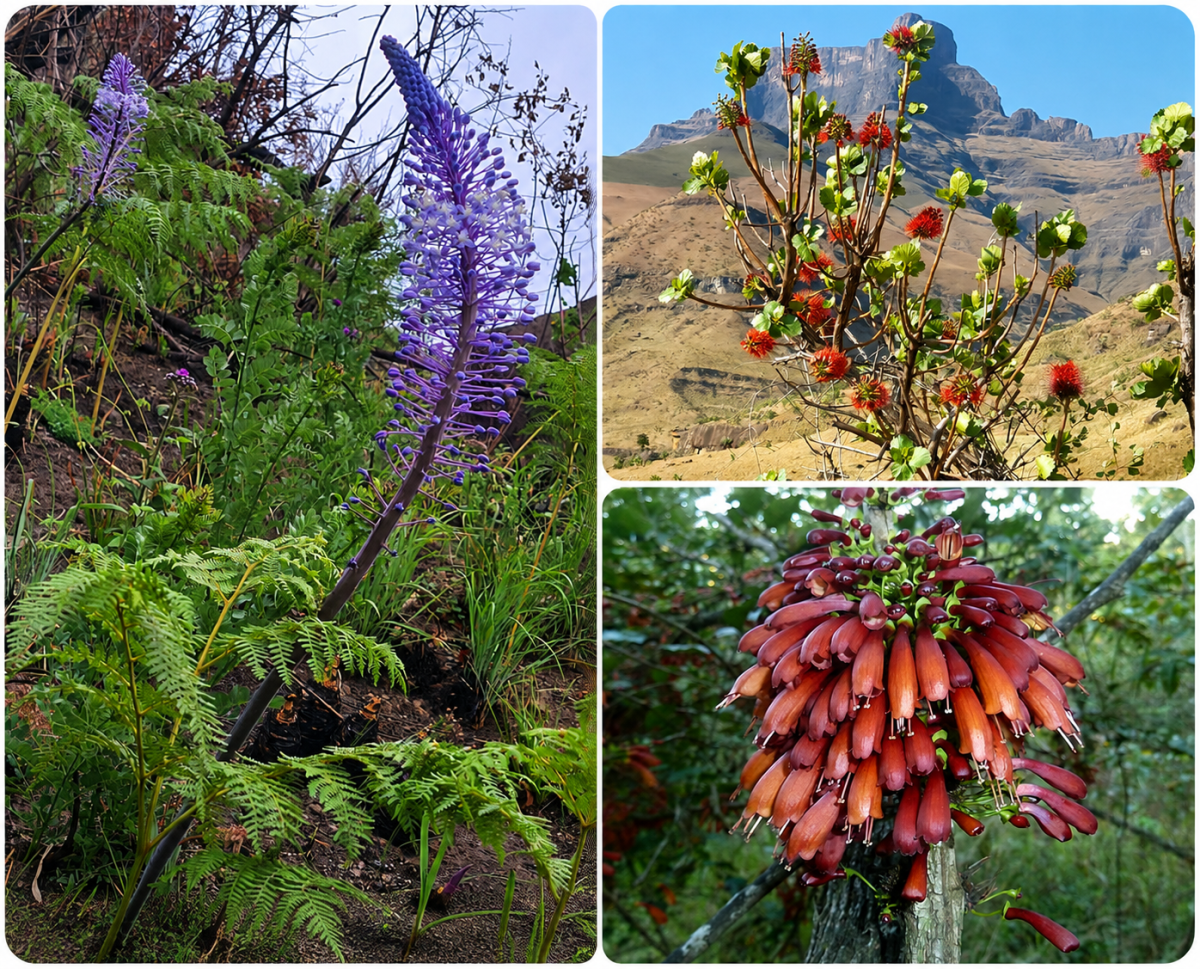
For much of the year, Halleria lucida is easy to overlook. It is a familiar tree in the mountain valleys and along the edges of the forests, but when spring approaches, something quite remarkable happens. Flowers begin to appear directly from the older stems and branches. The orange-red, tubular flowers seem almost out of place, as though they were attached to the tree overnight.
I often stop to look at them. It is one of those small details that you can easily miss if you are concentrating on the bigger landscape around you. Yet these details tell me the seasons are changing.
Then comes the Natal Bottlebrush, Greyia sutherlandii.
There is nothing subtle about this tree when it is in flower. The brilliant red flowers stand out against the still-dry winter grass and the muted colours of the mountain slopes. A tree covered in blossom can be seen from quite a distance, particularly when the sunlight catches the flowers.
I have always thought that the Natal Bottlebrush looks particularly at home in the Drakensberg. It is often found amongst rocky slopes and outcrops, and its somewhat rugged appearance seems to fit the landscape perfectly. Then, almost as if it has decided that winter has lasted long enough, it produces this extraordinary display of red.
Walking through the mountains at this time of year becomes a very different experience.
I find myself looking down as much as I look up.
The big scenery is, of course, still there. The cliffs, peaks and valleys have not changed. But suddenly, small patches of colour among the grass catch the eye. This is when the squills begin to appear.
The Blue Squill is particularly striking. Its tall flower spikes rise above the surrounding grass, carrying clusters of delicate blue flowers. Against the predominantly green and gold colours of the grasslands, the blue seems almost unexpected.
There is something special about finding one while walking. Once you have noticed them, you begin to see more. A few metres further on there may be another, and then another. Before long, you realise that what initially looked like an ordinary stretch of grassland is full of small signs that spring has arrived.
Several plants are commonly referred to as squills, and their names have changed over the years. The Blue Squill is now generally known as Merwilla plumbea, although many people still recognise its older name, Scilla natalensis. In the Drakensberg there is also the smaller Merwilla dracomontana, the Mountain or Miniature Squill.
I particularly enjoy finding these smaller plants because they are so easy to miss. They do not dominate the landscape. You have to be looking for them.
That is perhaps what I enjoy most about spring in the Drakensberg. It changes the way I walk.
I have walked many of the same paths over the years, sometimes repeatedly within a relatively short period, and yet the experience is never quite the same. The mountains may look familiar, but the vegetation is constantly changing. A tree that was bare a few weeks earlier is suddenly flowering. A rocky slope takes on a splash of red. A patch of grass reveals blue flowers that were not there the last time I passed.
And then there are the other spring flowers that gradually join the display.
As the season progresses, more colour appears among the grasslands and along the mountain slopes. The fresh green of new growth replaces the duller winter colours, and the landscape softens. The first flowers are followed by others, each with its own time and place.
It is easy to think of the Drakensberg as a landscape dominated by its spectacular scenery. The great cliffs and peaks naturally attract our attention, and rightly so. But the more time I spend here, the more I appreciate the smaller things.
A flower growing in a crack in the sandstone.
A splash of red on a rocky mountainside.
A blue squill standing amongst the grass.
These are the things that tell you what season it is. Spring in the Drakensberg is therefore not an event. It is a gradual unfolding. It starts quietly, almost unnoticed, and builds until suddenly you realise that the mountains have changed.
For me, it starts with those first flowers on the stems of the Tree Fuchsia. Then comes the brilliant red of the Natal Bottlebrush, followed by the blues of the squills. And once I start seeing them, I know that the mountains are waking up again.
It is one of the many reasons I never tire of walking here. |
| |
|
When Zebra returned to the Drakensberg Grasslands
|
| |
|
A recent discussion on one of our local WhatsApp groups got me thinking about Zebra.
A small herd had wandered into the road reserve, and the discussion quickly centred on the potential danger they posed to motorists. Some felt that the animals should be removed. There is certainly a valid argument for this. A collision with a Zebra could have serious consequences, both for the animal and for the occupants of a vehicle.
Others took a different view. They felt that perhaps the presence of wildlife in the road reserve should remind motorists that we are travelling through a landscape that still supports wild animals. Rather than simply removing the animals, perhaps we should slow down and become more aware of what is around us.
I could see merit in both arguments.
But the discussion also made me think about how fortunate we are to see Zebra returning to parts of the lower Drakensberg. It made me wonder what this landscape must have looked like before roads, fences, farms and settlements changed the way animals moved through the grasslands.
I was reminded of this again recently when I was fortunate enough to hike with a group of boys from a wilderness school. We came across a herd of Zebra and stopped to watch them.
What struck me was how familiar they seemed. In many respects, they reminded me of horses. The resemblance is hardly surprising. Zebra, horses and donkeys all belong to the horse family, the Equidae. They share the same basic body structure — long legs, a single hoof on each foot, powerful hindquarters, a long neck and those wonderfully expressive ears.
But their behaviour really caught my attention. As we watched, some continued grazing while others lifted their heads and looked towards us. Their ears moved constantly, picking up sounds from different directions. Every so often, one animal would become alert to something that the rest of us had not noticed.
I have spent enough time around horses to recognise that behaviour. A horse can be quietly grazing one moment and then suddenly raise its head, prick its ears and focus intently on something in the distance. The zebra was doing exactly the same thing.
The herd also showed a strong sense of social awareness. The animals grazed independently, but they were clearly aware of one another. The younger animals stayed close to the adults, and the herd responded almost as a single unit when something caught their attention.
For the boys, it was a memorable encounter. For me, it reminded me of the value of simply stopping and watching animals rather than rushing past them.
We often see Zebra from a vehicle and immediately notice their striking black-and-white coats. But spend a little time watching a herd and the stripes become almost secondary. You begin to notice the animals themselves — the way they move, communicate, respond to one another and remain constantly alert to their surroundings.
And, like horses, individual Zebra have their own character. Every Zebra also has its own stripe pattern. The arrangement varies from one individual to another, particularly around the shoulders, flanks and rump. Once you have spent some time looking closely at them, you start to realise that a herd isn't simply a collection of identical black-and-white animals.
Their stripes have fascinated people for centuries, and scientists are still trying to understand why the pattern evolved. Growing evidence suggests the stripes help reduce attacks from biting flies, while they may also serve other functions related to recognition and communication.
Whatever their evolutionary purpose, they certainly make the zebra one of Africa's most recognisable animals.
There is something almost hypnotic about watching a herd move through long grass. When they are standing still, each animal is clearly visible. But once they start moving together, the stripes seem to merge into a constantly changing pattern.
It must have been an extraordinary sight when much larger herds occupied these grasslands. It is difficult to imagine today, but the grasslands around the Drakensberg once supported large numbers of grazing animals.
Nineteenth-century accounts give us some idea of how abundant the game could be. In 1859, Robert James Mann recorded Blesbok, Quagga, Wildebeest and Zebra occurring below the Drakensberg on the Natal side during the three coldest months of winter.
An even more evocative account comes from the French traveller Adolphe Delagorgue. In 1843, after crossing the Drakensberg and travelling towards the Vaal River, he encountered enormous herds of Wildebeest and Quagga near Gevecht Kop. His description suggests the sheer scale of these movements. The herds had cropped the grass so heavily that there was, in his words, “not a blade of grass to be seen”, while everything they had not eaten had been trampled under their feet.
It is almost impossible to picture this today. Imagine standing somewhere in the lower Drakensberg and looking across the grasslands. Instead of the occasional group of antelope, there might have been hundreds or even thousands of grazing animals moving across the landscape.
A historical route through the mountains, known as Quagga's Pad, reminds us of the animals that once moved through this country.
I should add a qualification here. Some nineteenth-century observers used the word “Quagga” rather loosely to refer to Zebra, and the extinct true Quagga had a distribution largely south and west of the Drakensberg. Nevertheless, there is no doubt that Zebra and other large grazers were once a much more conspicuous part of the wider Drakensberg and Highveld landscape than they are today.
Zebra are primarily grazers, which matters when considering their place in the Drakensberg. They are not simply attractive animals that happen to live among the grass. Their grazing forms part of the ecological processes that shape the grassland itself.
Large herds of grazing animals crop the grass, move seeds, create pathways and return nutrients to the soil. Their grazing also interacts with that of other herbivores, each species using the grassland in slightly different ways.
When large numbers of animals were moving through the region, their combined effect must have been considerable. The disappearance of these herds was not caused by a single factor. Hunting, agricultural expansion, fencing and the transformation of natural grasslands all contributed to the decline of large wildlife populations and the seasonal movements that once connected different parts of the landscape.
The Drakensberg that we know today is therefore not quite the same landscape that earlier generations encountered. That is why I find the return of Zebra to parts of the lower Drakensberg particularly encouraging.
Their presence reminds us that the grasslands can still support large grazing animals. It also gives us an opportunity to think differently about the landscape around us.
Of course, we have to manage this carefully. Where wildlife and roads overlap, genuine safety concerns arise. Zebras are large animals and can move quickly, particularly when startled. Motorists need to be aware of this and should slow down when travelling through wildlife areas.
But perhaps the responsibility doesn't lie entirely with the animals. If we know that wildlife is returning to these areas, perhaps we should also adjust our own behaviour. We should expect animals. We should drive accordingly. And we should remember that a road through the Drakensberg is still a road through a living landscape.
I have spent many years travelling through the Drakensberg, and one thing that continues to fascinate me is how much more there is to the landscape than what we see at first glance. The mountains and grasslands carry the history of people and animals that have occupied them for thousands of years.
The San knew this landscape intimately. They would have understood its animals, seasons, water sources and changing vegetation in ways that few of us do today. The large herds that once moved through the grasslands were not simply part of the scenery; they were an integral part of the environment people lived in.
Standing watching that herd of Zebra with the boys, I found myself wondering what the grasslands would have looked like when the great herds still moved through them.
Perhaps there were Zebra spread across the slopes, mixed with Wildebeest and Blesbok. Perhaps Eland were moving through the valleys, and smaller antelope were scattered across the grass. Perhaps the sound of hooves and the movement of animals were such a familiar part of the landscape that nobody thought twice about it.
We will never see that Drakensberg again. But perhaps we don't have to.
The return of Zebra gives us a small glimpse of what was once here. Every herd moving across the grasslands reminds us that these open spaces have a much longer history than the roads, fences, and buildings that now surround them.
So the next time I see Zebra beside one of our roads, I will probably think back to that WhatsApp discussion. I will understand why people are concerned about road safety. But I will also stop and appreciate what I am seeing.
Because these are not simply animals that have wandered into the wrong place. They are part of this landscape's story. And perhaps, after being absent for so long, they are finding their way home. |
| |
|
Unveiling the Hidden: Technology and the Drakensberg San Rock Art
|
| |
|
It can be an incredibly exciting experience to find a San rock painting that has faded almost to obscurity. How many times have I stood before a panel in a Drakensberg shelter and known there was something there but found it impossible to discern it? Many of the San paintings are now, due to time, weathering and the elements, difficult to read – some are still exceptionally clear, whereas others appear almost as indistinct shadowy stains against the sandstone.
Digital photography has long been a useful way to document these paintings, but advances in image enhancement have taken us to a whole new level.
I have been exploring a mobile application called Rock Art Enhancer and have found it incredibly useful for making sense of some of the more faded San paintings I encounter on Drakensberg hikes. What's particularly fascinating is the ability to run various enhancement filters on a photograph and sometimes pick out detail which I wouldn't otherwise have made out at all. It’s rather remarkable, really.
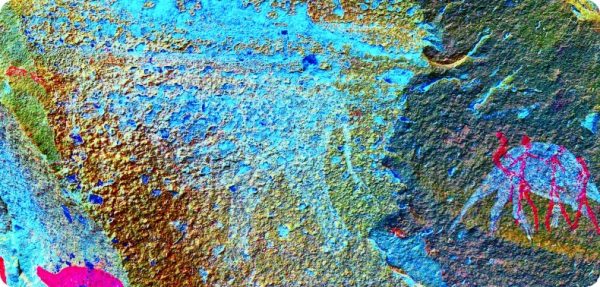
The key to using this technology is to understand what these applications actually do. They don't restore the painting, nor do they replace lost colour. What they actually do is manipulate the information stored in the digital image to change colour, tone, brightness and contrast so as to make subtleties, or in this case minute differences between rock colour and the pigment, more visible. This is especially apparent where the paint, originally vibrant red, for example, is no longer much different in colour to the surrounding rock. A faded rock painting, which from your initial glance only comprises a light red wash on the rock surface, is transformed by image enhancement to reveal shapes of humans or animals and any fine lines that once marked them.
For me, their value lies in adding another layer to my viewing experience. I have the original photo; I process it to see different enhanced forms, and sometimes only one will make features I would otherwise miss more obvious. This enhanced image doesn't necessarily represent exactly what the artist painted (another filter might bring up other features), but it offers valuable additional information to consider.
The app I used, Rock Art Enhancer, is designed specifically for analysing rock art photos, and its tools include image enhancement features such as colour stretch, histogram adjustment, saturation control, hue manipulation, and brightness settings.
It's particularly useful for this app to be able to function at the handheld, mobile phone level on account of the fact that many of the rock-painting shelters that I seek out in the Drakensberg are located far away from roads, reliable electrical supply, or even, these days, decent cell signal and Wi-Fi! I can take a photograph and immediately investigate it in the field, which proves quite a helpful technique. Standing before the rock art, I take a photo and apply different filters one at a time, comparing the results. Sometimes, nothing will be revealed.
Other times, though, there'll be something new apparent from the digital photograph that I had previously quite missed. Those are the occasions that the technology comes into its own.
There are, of course, no other ways of doing these things. One of the first image-enhancement tools to gain currency in world rock-art circles is called DStretch; Jon Harman developed it, and photographers and researchers have used it extensively.
One process employed by DStretch is known as 'décorrelation stretching' and is used to bring out colour differentiations that the human eye may not, naturally, be able to discern. A mobile app based on this system, named iDStretch for Apple phones and aDStretch for Android phones, is available, but you'll have much more flexibility on desktop than with ImageJ and the DStretch plugin (though ImageJ is free and runs very well on MacBooks or Linux systems). Beyond these few main alternatives, those using computer-based tools with DStretch plugins still do have an advantage.
Any rock image-processing application, beyond just boosting brightness, would, if not increase contrast and definition, at least enhance differences.
This is extremely applicable, by the way, where there is pigment over another painting or faded paint. |
| |
|
For purposes of this article, I'll use two paintings, both depictions of elephants, which represent another type of San rock art for the Drakensberg that can be somewhat difficult to encounter in large paintings (as, frankly, you don't see very many at all). It raises fascinating questions about the artist's world, which was vastly different from the world we can picture today. The first elephant at all, though, is not one that jumps out at you on first glance due to the faded paint and camouflage against the light rock.
After the filters are run on the painting, though, an outline is made apparent.
|
| |
|
Four Maidens Trance Dance: Dingaan's Shelter using DSUV Stretch Filter |
| |
|
And so then for our final and perhaps most enticing illustration – four San maidens dancing in what appears to be a “trance-like” way. Dancing San are among the most famous rock art from the Drakensberg; these figures offer great insight into the spiritual and ritualistic nature of San life. Although certain aspects are unclear when the photograph of the four dancers was initially scanned and processed using a specific enhancement filter, much more detail appears – their form, pose and relation to each other are suddenly more accessible.
However, herein lies the real danger: these enhanced photographs are by no means definitive proof of what the San artist once captured on stone.
Indeed, because other enhancement filters might just focus on other visual features, other interpretations would likely follow. Keep the photos scanned and processed with contrast against each other and this makes for a really effective observational guide – one I found both entertaining and enlightening too.
All in all, though, what has convinced me is that, because rock paintings are fragile and an intrinsic part of our heritage, we will increasingly need to use modern technology as the paintings' fabric continues to decline. What will we miss, though – without such advanced photographic enhancement – as, over time, they become so extremely hard to see? |
| |
|
Ghilraen Laue's impact on interpreting San Rock Art
|
| |
|
Having spent many years walking through the Drakensberg and visiting its painted shelters, I have gradually become more aware of just how much variation there is in San rock art.When I first became interested in the paintings, I was mainly concerned with trying to understand what the individual figures represented. Over time, however, I have become increasingly interested in the differences between shelters and between different parts of the Drakensberg.
The work of archaeologist Ghilraen Laue has been particularly interesting to me in this regard. Her research has encouraged a greater appreciation of the regional differences in San rock art and of the communities and landscapes in which the paintings were produced. This fits very well with what I have seen myself in the mountains.
One of the simplest things to notice is the paintings' colour. Visit a number of shelters in the Central and Northern Drakensberg and the differences in colour can be quite striking. The paintings at Game Pass Shelter, for example, have a very different appearance from those at Battle Cave.
There are various reasons for this. The age of the paintings and weathering will obviously have an effect, as will how pigments were prepared and applied. But I have often wondered how much of the variation is also related to the ochre and other mineral pigments available locally.
The San were making their paints from materials they could obtain from the landscape around them. It seems reasonable that differences in the geology of different areas would have influenced the pigments available to them.
I now find myself looking at this whenever I enter a shelter. The colour of the paintings is not simply an artistic choice made independently of the landscape. The landscape provided many of the materials the artists used.
The same applies to the subjects that were painted.
I have noticed that scenes involving conflict, fighting, and confrontation seem to occur more frequently in the Southern Drakensberg than further north. In many shelters in the Central and Northern Drakensberg, there appears to be greater emphasis on imagery related to the spiritual world and the experiences of San shamans.
Of course, we need to be careful not to draw firm conclusions from this. We are dealing with paintings made many generations ago, and we cannot simply assume that every scene has a meaning that we can now identify with certainty. Nevertheless, the differences are there, and I think they deserve attention.
The same is true of the animals represented in the art. The elephant is a good example. In the Central and Northern Drakensberg, elephant images are surprisingly uncommon. Yet when one visits rock-art areas in the Western Cape, particularly the Cederberg, elephants are encountered much more frequently, including representations of groups or herds.
That seems to me to be more than an artistic curiosity. The people who painted these images lived in particular landscapes. They knew the animals around them and depended on those landscapes for food, water and other resources. It is hardly surprising that the animals they encountered should feature in their art and their beliefs.
This is where I find Laue's emphasis on regionality particularly useful. There is sometimes a tendency to talk about “San rock art” as though it represents one consistent tradition extending across Southern Africa. Important themes and beliefs do occur widely, but the San were not one single community living in one uniform landscape.
Different groups lived in different places. They had their own histories and traditions and interacted with neighbouring communities in different ways. They also had different animals, plants, mountains and landscapes around them. It would therefore be surprising if their art did not show regional differences.
Another aspect of Laue's work that I find fascinating is the question of sound. Archaeologist Aron Mazel previously drew attention to the extraordinary concentration of paintings in Didima Gorge and considered whether the gorge's acoustic qualities might have contributed to its importance.
Anyone who has stood in Didima during a summer thunderstorm will understand why this idea is interesting. The sound of thunder reverberating between the cliffs can be extraordinary. Even a relatively small sound can travel a long way through the gorge, and the echoes create a very different experience from that of an open landscape.
Laue and her colleagues have subsequently investigated the acoustic properties of painted shelters more systematically. Their findings suggest that acoustics alone cannot explain why San people selected particular places for painting. That makes sense. A shelter's location, its views, access to water, the surrounding mountains, animals, plants, and its spiritual significance may all have mattered. Sound may have shaped the experience of some places without being the reason paintings were made there.
This distinction matters because it reminds us not to look at the paintings in isolation. When I take people into a rock-art shelter, I increasingly find myself looking at the whole setting. Where is the shelter in relation to the valley? What would the people who used it have seen? What animals would have been moving through the area? How would the place have sounded? How easy was it to reach? These things help us appreciate that a painted shelter was not simply a convenient piece of sandstone someone decided to paint. It was part of a landscape. And that landscape was part of the lives of the people who painted there. This is, for me, one of the most useful contributions of Ghilraen Laue's work. It encourages us to look beyond the individual painting and to think about the people and communities behind it.
It also makes me more cautious about assuming one explanation for all San rock art.
The paintings of the Drakensberg share many themes, but they also differ considerably. The colours vary between shelters. The animals vary between regions. The emphasis on different subjects varies. And the landscapes in which the paintings occur are remarkably diverse.
The more shelters I visit, the more I see these differences. I think that is what makes the rock art so fascinating. Every shelter has its own character. Every group of paintings has its own setting. And behind every image was a person who lived in these mountains and experienced them in ways that we can only partly understand today. For me, the value of Laue's work is that it encourages us to keep asking questions about those differences.
Instead of simply asking what a painting means, perhaps we should also ask why it was painted there, why that particular animal or figure was chosen, what materials were available, and what the surrounding landscape meant to the people who lived in it. We will not always be able to answer those questions. But after spending years walking through these mountains, I have come to believe that sometimes the questions themselves are what make the rock art more interesting. The paintings are not just pictures on rocks. They are traces of people who lived here, knew these mountains intimately, and left behind glimpses of a world that has largely disappeared. And every time I enter another painted shelter, I find myself looking a little more closely. |
| |
|
Discovering the Lower Drakensberg: Hiking Culfargie and the Mdedelelo Wilderness
|
| |
|
There is a tendency when we talk about hiking in the Drakensberg to think about the big climbs. Reaching the escarpment, tackling one of the great passes or standing on top of one of the high peaks are often seen as the ultimate objectives. There is certainly something special about being up there, but over the years I have come to appreciate that some of my most enjoyable days in the Drakensberg have been spent much lower down.
The Culfargie section of the Central Drakensberg is a wonderful example. Situated below the great wall of the Drakensberg, Culfargie forms part of the Monk's Cowl section of the Mdedelelo Wilderness Area within the Maloti-Drakensberg Park World Heritage Site. For me, it offers one of the best introductions to the lower Drakensberg and shows how much there is to experience without necessarily climbing to the top of the escarpment.
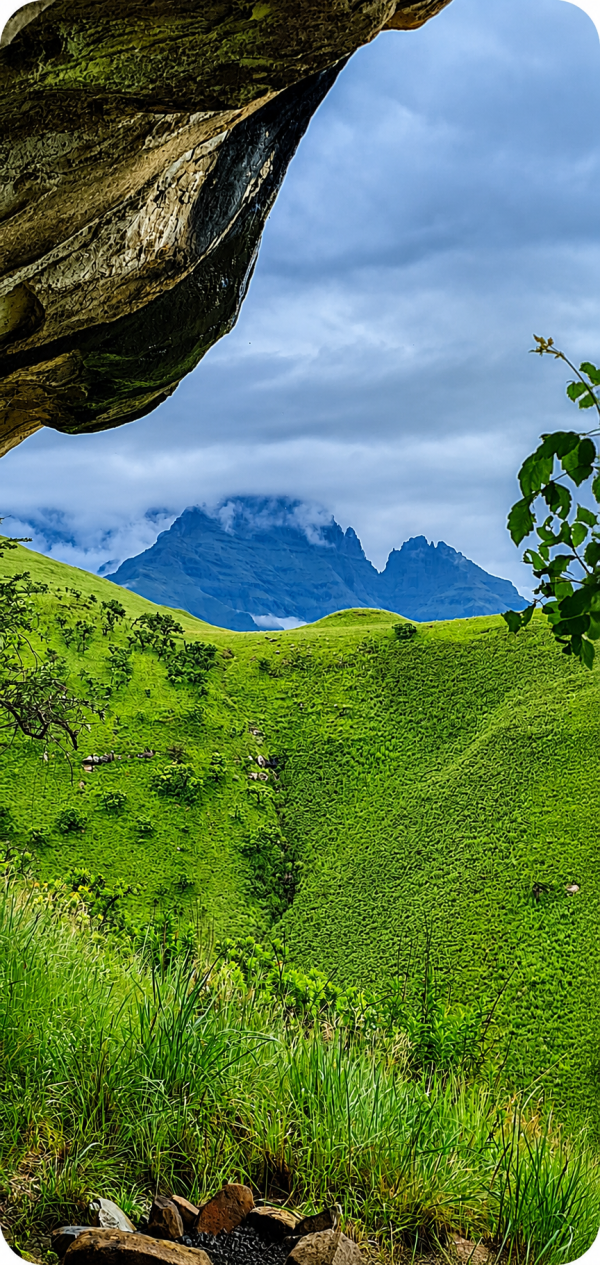
The lower Drakensberg has its own character. The trails pass through open grasslands, protea-covered slopes, valleys, sandstone cliffs and clear mountain streams, while the great basalt peaks rise above the landscape. It is an environment that encourages you to slow down and look around.
I have spent many enjoyable days exploring the trails around Culfargie, and what I particularly enjoy is the variety. Some walks are easy outings, while others offer a more demanding day in the mountains. You can explore valleys, climb towards the sandstone caves, or simply find a quiet place to sit and enjoy the view.
One walk I particularly enjoyed is the Monk's Cowl, Hlathikulu Nek and Makhulumani Valley Loop. It gives a wonderful sense of the character of this part of the Drakensberg, with the landscape changing as the trail moves between the open slopes and valleys.
The Steilberg and Makhulumani Valley Loop is another favourite. There is something particularly enjoyable about following these lower valleys. They feel intimate compared with the enormous scale of the escarpment above, yet the high mountains are always there in the background.
Then there is Jacob's Ladder, which provides a more substantial climb into the higher country. Despite its name, it is not a ladder but a steep, zig-zagging route up the hillside. The climb is well worth the effort, particularly as the views become increasingly impressive as you gain height.
Stable Cave is one of the rewards of exploring this area. I have always enjoyed reaching a Drakensberg cave after a day's walking. There is something very satisfying about arriving with everything you need in your backpack, finding a place beneath the sandstone overhang and settling down as the light begins to fade.
Stable Cave is a particularly impressive shelter, with its sandstone overhang and wide views across the surrounding country. It is also a wonderful place from which to appreciate the scale of the Drakensberg. From the cave, the lower valleys stretch away below while the great peaks dominate the skyline.
Vaalribbokkop Cave is another favourite overnight destination. The cave takes its name from Vaalribbokkop, the prominent sandstone mountain in the area, and offers another way to experience the Drakensberg, very different from a conventional campsite.
These caves also have a much older history. Vaalribbokkop Cave, also known as Bee Shelter, contains San rock art. Sitting beneath a sandstone overhang that was used by people many generations before us adds another dimension to the experience. These shelters are not simply places where hikers can spend the night; they are part of the Drakensberg's cultural landscape and remind us that people have moved through and used these valleys for thousands of years.
Another walk I have enjoyed is the Three Pools and Makhulumani Valley Loop. Like the other routes in this part of Culfargie, it demonstrates that you do not have to undertake a major ascent to experience the wilderness. Some of the most enjoyable days can be spent following the contours of the lower slopes, crossing streams and exploring the valleys beneath the great cliffs.
The wildlife is another reason I enjoy these walks. The Culfargie area is home to herds of Eland, and encountering these magnificent animals while walking is always memorable. Sometimes they can be seen high on the slopes, while on other occasions they are surprisingly close to the trail. There is something particularly impressive about watching an Eland herd moving quietly across the grasslands against the backdrop of the Drakensberg.
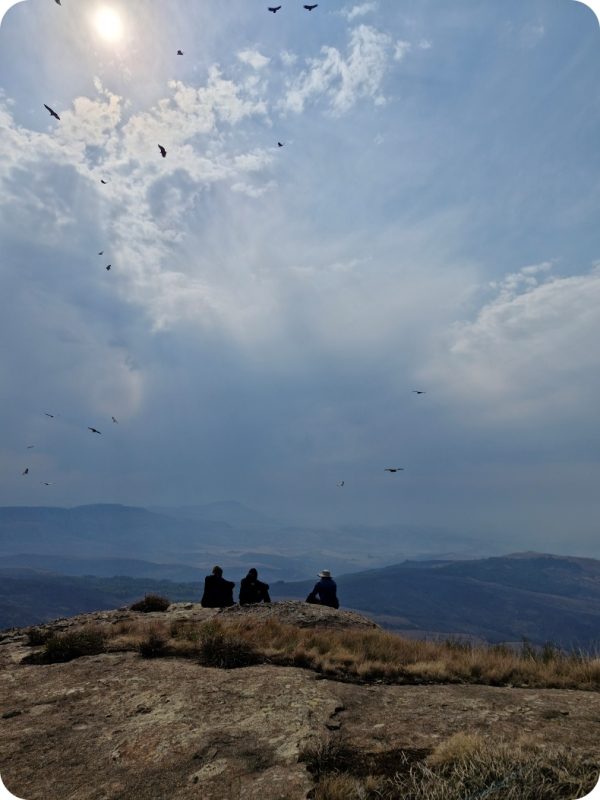
Then there are the vultures. The cliffs around this part of the Drakensberg provide important nesting habitat, and watching these magnificent birds riding the thermals is one of the great pleasures of hiking here. A Cape Vulture circling high above the cliffs can remain almost motionless as it takes advantage of the rising air. When several birds appear together, the sight is spectacular. It is worth stopping for a while and simply watching them.
Perhaps the greatest attraction of the Culfargie trails, however, is the view. The high mountains are never far away, and from different points along the trails the skyline opens up to reveal some of the most recognisable peaks in the Central Drakensberg.
The Three Puddings and Cathedral Peak are prominent in one direction, while the Inner and Outer Horns, the Chessmen, Mitre and Cleft Peak form part of the extraordinary skyline further along. Closer to Culfargie are the Sphinx, Monk's Cowl and Cathkin Peak.
I never tire of looking at these mountains. The peaks' appearance changes continually with the weather and the light. A mountain that looks familiar from one trail can look completely different from another valley.
This is one of the things I particularly enjoy about Culfargie. You can spend a day walking through the lower valleys while continually looking up at these giants. You gain an appreciation of the scale and character of the Drakensberg without necessarily having to climb them.
The wider setting is also important. The Monk's Cowl Wilderness forms part of the Mdedelelo Wilderness Area, together with the Cathedral Peak section. This places the Culfargie landscape within a much larger wilderness system and within the Maloti-Drakensberg Park World Heritage Site.
For someone staying in the Central Drakensberg, Culfargie offers an excellent starting point for exploring this wilderness. You can begin with a relatively modest walk and gradually explore further. You can follow one of the valleys, climb towards a cave, spend a night beneath a sandstone overhang or link several trails together into a longer outing.
And if you eventually decide that you want to climb higher, the routes into the upper Drakensberg are there. But you don't have to.
I think this is something worth remembering when we talk about hiking in the Drakensberg. The Drakensberg is not only about the escarpment. It is the valleys below it, the sandstone cliffs, the grasslands, the proteas, the streams and pools, the wildlife and the enormous mountains that surround you. It is also about walking slowly enough to notice what is happening around you.
A herd of Eland appearing on a distant slope. A Cape Vulture circling above a cliff. The sudden appearance of Cathedral Peak through a gap in the hills. The evening light catching the sandstone around Stable Cave. Or simply sitting outside a cave after a long day's walk and watching the shadows move across the mountains.
These are all part of the experience.
If you want to discover the Drakensberg, I strongly recommend spending some time exploring the Culfargie trails. They offer a wonderful introduction to the lower Drakensberg while giving you a real sense of the wilderness beyond.
And once you have discovered these trails, there is always another valley to explore, another cave to sleep in and another view of the mountains waiting around the next corner. |
| |
|
A comprehensive list of birds in the Drakensberg has been created using information from various sources, including the Wildlife and Environment Society of South Africa, Birdlife South Africa, and Ezemvelo KZN Wildlife. The plan is to update this list regularly as the names of bird species change and provide a link for all future issues of the Drakensberg Times. The table indicates common and notable bird species in the Drakensberg. Click on the following link - Drakensberg Bird List. |
| |
|
EVENTS in the CATHKIN PARK, WINTERTON and NORTHERN DRAKENSBERG
Winterton parkrun takes place every Saturday morning from the Waffle Hut starting at 08.00. Register on www.parkrun.co.za/winterton Cannibal Cave parkrun, which takes place in the Northern Drakensberg.
Cathkin Park Walking Group takes place every Tuesday. 8.00 in Winter and 7.00 in Summer. Contact Nick 0794936424
Central Drakensberg Hiking Group Saturdays and overnight hikes. Contact James Seymour for details. 0829255508.
Cathkin Park Community Projects Run takes place on the First Friday of the month at 17.00 in Summer and 16.30 in Winter at The Nest. (April to September).
Drakensberg Boys’ Choir School has a concert on Wednesday afternoons during term times www.webtickets.co.za or 0364681012 or 0785118680.
Mountain Music Club takes place on the last Saturday of every month, from 5 pm, usually at Mac’s Café, Cedarwood Shopping Centre. Dave: 0724839049.26th
2026
28th – 30th Sept: Ardmore Art Course at Ardmore. Alana 0824287889
2nd – 4th Oct: Drakensberg Sky Dive at Berg Air Lifestyle Centre. Contact 0790227307
3rd Oct: Lutheran Church Bass Fishing Competition: See Face book. Oliver 0823441544 or Ross 0825582974
3rd Oct: Run the Berg at All Out Adventures https://runtheberg.co.za//
23rd – 24th Oct: Drakensberg Boys Choir School Open Weekend www.dbchoir.com
23rd – 25th Oct: Kudu Canter Linwood Farm Bergville. https://bergtrailrun.co.za/trail-run-info/
7th Nov: Winterton Street Festival Book your Stall Hester: 0615380904
14th Nov: Car Show at Berg Air Lifestyle Centre. To exhibit: events@copperfields.net.za or
0794719537
4th – 6th Dec: Christmas in the Berg at Drakensberg Boys Choir School www.dbchoir.com
2027
27th Feb: Sterkfontein Dam Swim Details: Shaun swim4life1500m@gmail.com
30th Apr- 2nd May: Yellow - billed Oxpecker Trail https://theoxpecker.co.za
7th May - 9th May: Red - billed Oxpecker Trail https://theoxpecker.co.za
14th -16th May : African Oxpecker Trail https://theoxpecker.co.za
29th -30th May: 2 Day Berg and Bush https://bergandbush.co.za
4th - 6th June: 3 Day Berg and Bush https://bergandbush.co.za
Ann Gray
|
| |
|
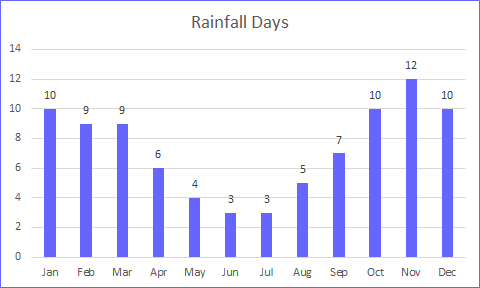
Drakensberg's Weather Charts |
| |
|
Drakensberg Tourism Directory |
| |
|