
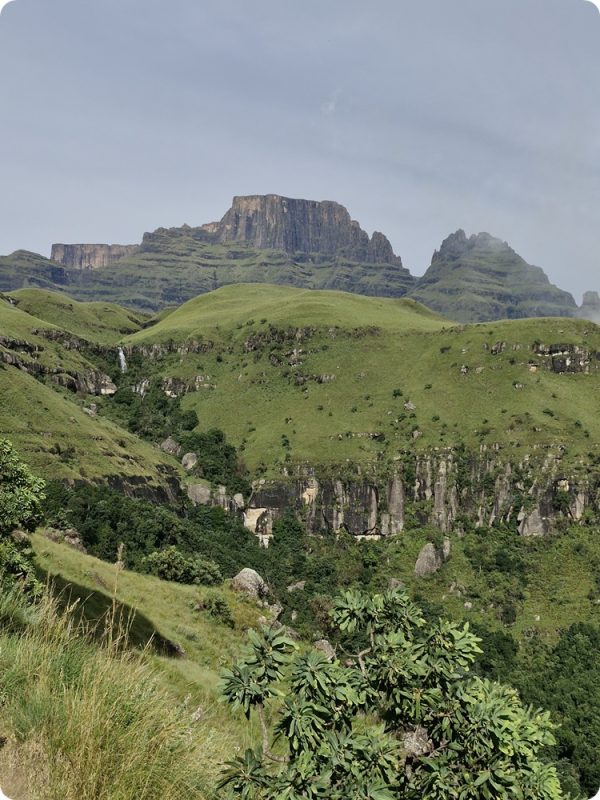






The Drakensberg landscape we see today is relatively recent in geological terms.
Around 200 million years ago, this area looked very different — more like a network of rivers and floodplains. The evidence for that still exists, particularly in the Elliot Formation, where fossils and trackways have been preserved.
In the Golden Gate area, discoveries of Massospondylus eggs and embryos have provided important insights into early dinosaur development. The interpretation centre there does a good job of placing these finds in context.
Closer to home, in the Injisuthi area, there are fossilised footprints preserved in a sandstone overhang often referred to as Dinosaur Cave. They’re easy to miss if you don’t know where to look, but once you see them, the scale of time involved becomes very real.
Unlike bones, footprints record movement — a moment when something passed through wet ground that later hardened into rock.
It’s not something most people come to the Berg for, but it adds another layer to the landscape if you take the time to look.