|
For the Tourism Trade and Visitors to the Drakensberg |
| |
|
Copyright: Cathkin Booking and Management Services
|
| |
|
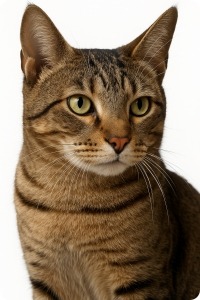
African Wildcat: (Felis lybica)
Photo: Mark Robertson |
| |
|
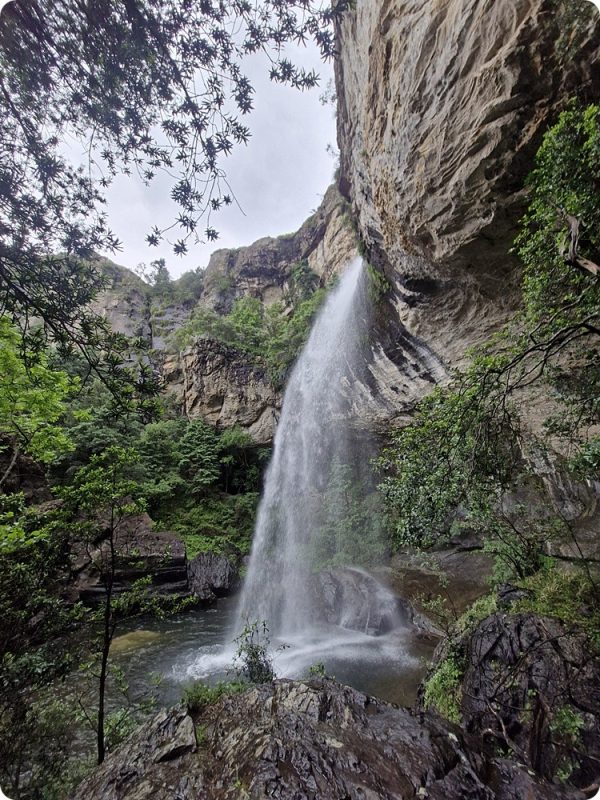
Summer is the season when the Drakensberg comes alive with water. Warm days and afternoon thunderstorms send rain cascading from basalt cliffs and sandstone ledges, reawakening hundreds of waterfalls that lie silent through winter. Fine silver threads grow into powerful veils, plunging into fern-filled gullies and deep rock pools below. Rivers swell, valleys echo with the sound of rushing water, and the air carries cool mist and the scent of wet earth. From hidden cascades beside mountain paths to iconic falls dropping from the escarpment, summer reveals the Drakensberg at its most dramatic and life-giving. |
| |
|
“In summer, the mountain calls not with snow and silence, but with water and light.”
— Gaston Rebuffat |
| |
|
Contents:
- Drakensberg's African Wildcats;
- Rugged Glen to Cannibal Cavern Hike;
- The cannibals of Cannibal Cave;
- Lower Mushroom Shelter's Rock Art;
- A Drakensberg birding list;
- Drakensberg Events;
- Weather charts;
- Tourism directory
|
| |
|
Drakensberg's African wildcat (Felis lybica)
|
| |
|
The African wildcat (Felis lybica), the original ancestor of today’s domestic cat, is one of the Drakensberg’s most secretive and rarely observed predators. Perfectly adapted to grassland, rocky foothills and high-altitude environments, this small carnivore plays an essential ecological role as a controller of rodents and other small animals. However, widespread across parts of Africa, genuinely wild populations are increasingly scarce, particularly in montane protected areas such as the uKhahlamba-Drakensberg Park.
Within the Monks Cowl section of the park, the African wildcat was notably recorded by Mark Robertson, former Officer in Charge of the area. Robertson regarded the species as one of the section’s most vulnerable wild residents and was known to be particularly protective of them. His concern was grounded in both their natural low numbers and the growing pressures exerted by human activity along the park’s boundaries. His observations remain a crucial local contribution to the understanding of this elusive species in the Drakensberg.
The African wildcat is slightly larger and more finely built than most domestic cats, with long legs, a slender body, and a sandy-grey to tawny coat, marked with faint stripes on the body and bold black bars on the legs and tail. A darker dorsal stripe running along the spine is often visible. Unlike feral domestic cats, wild cats retain a distinctly upright posture and longer limb proportions. Strictly solitary and mainly nocturnal, they hunt rodents, birds, reptiles and large insects, helping to maintain ecological balance within their habitat.
One of the most serious threats facing the African wildcat today is hybridisation with domestic cats. As settlements, farms and tourism developments expand along the edges of protected areas, free-roaming domestic cats increasingly penetrate wild landscapes. Interbreeding between wild and domestic cats leads to genetic dilution, slowly eroding the purity of wild populations. Over time, this hidden process can result in the effective disappearance of true African wildcats, even where cats remain visible in the landscape.
Additional threats include habitat fragmentation, accidental poisoning through pest-control programmes, disease transmission from domestic animals, and occasional road mortality. Because the species is naturally shy and seldom seen, population declines often go unnoticed until they become critical.
The continued survival of the African wildcat in the Drakensberg depends on responsible pet ownership in neighbouring communities, strong buffer-zone management, and sustained conservation awareness. The protective attitude shown by conservation officers like Mark Robertson serves as a reminder that even the most elusive predators form an irreplaceable part of the Drakensberg’s living natural heritage.
Field Guide Entry: African Wildcat
Common name: African Wildcat
Scientific name: Felis lybica
Size: Head–body length ±45–75 cm; tail 25–38 cm
Habitat: Grasslands, rocky foothills, montane slopes
Activity: Mostly nocturnal and solitary
Diet: Rodents, birds, reptiles, insects
Key Features: Sandy-grey coat, faint body stripes, bold black leg and tail rings, dark dorsal stripe, long legs
Status: Threatened mainly by hybridisation with domestic cats, disease and habitat fragmentation
Drakensberg Note: Rare but confirmed, including records from the Monks Cowl area |
| |
|
Cathkin Peak and Sterkhorn |
| |
|
The Hike to Cannibal Cave from Rugged Glen
|
| |
|
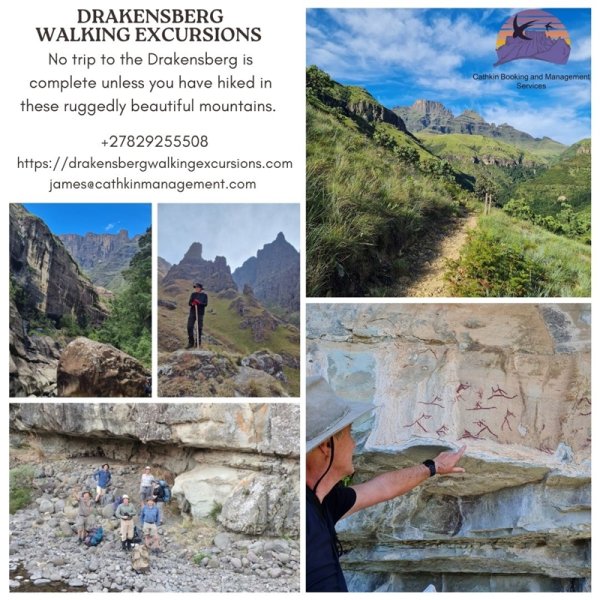
The hike to Cannibal Cave from Rugged Glen is widely regarded as one of the most rewarding and dramatic day walks in the Northern Drakensberg. Covering roughly 16 kilometres with an elevation gain of about 640 metres, the route typically takes around six hours to complete. Depending on conditions, fitness levels, and time spent at the cave itself, it can range from a solid moderate hike to a demanding extreme outing. Either way, it is a journey that delivers outstanding scenery and a powerful sense of place.
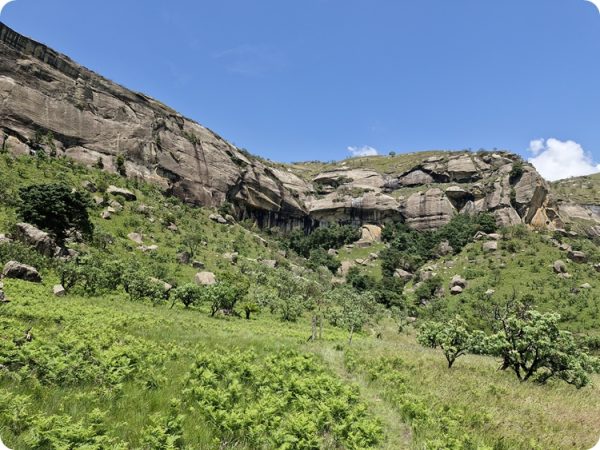
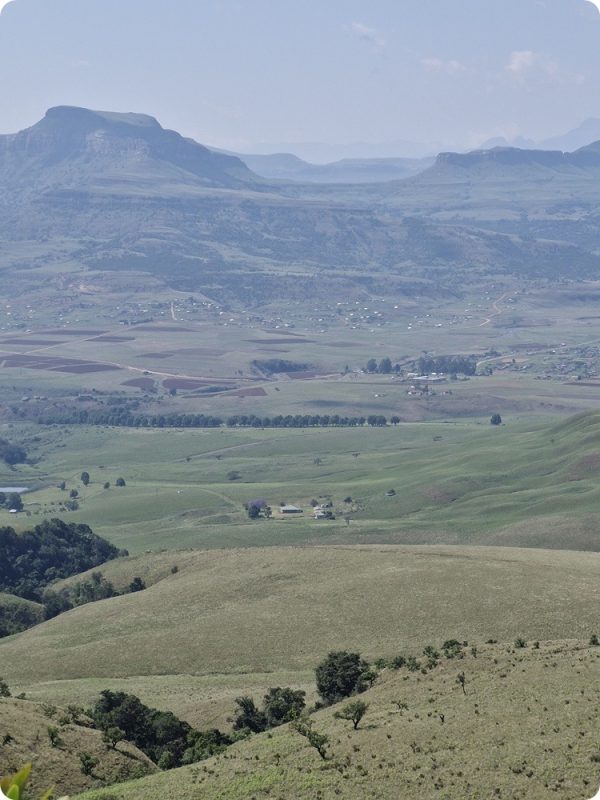
The trail begins in the lower foothills of the Drakensberg, winding through undulating grassland and gradually drawing closer to the distinctive sandstone formations that define this part of the range. Massive ridges and buttresses rise above the path, their warm ochre tones catching the light and shifting in colour as the day progresses. As altitude is gained, the views expand dramatically. One of the great visual rewards of the hike is the distant but unmistakable presence of the Amphitheatre, its towering basalt wall stretching across the skyline and lending a scale and grandeur to the landscape that is difficult to match anywhere else in the country.
The terrain changes character constantly. Easy traverses across open slopes are followed by steeper climbs and rocky sections that demand care and concentration. In summer, the route passes through lush grasslands alive with wildflowers, insects, and birds, while winter brings crisp air, clear horizons, and a palette of muted golds and browns. The contrast between wide, open vistas and the close, sculpted drama of the sandstone cliffs gives the walk a dynamic, ever-changing rhythm.
The destination, however, is the true highlight. Cannibal Cave—also known as Cannibal Cavern—is an enormous rock shelter set high in the sandstone. Its vast overhang creates a natural amphitheatre of shadow and stone, offering shelter, sweeping views, and a strong sense of isolation from the world below. The cave lies on the property of the Cavern Resort, and visitors are required to obtain permission before entering. It also lies on the border of the Royal Natal section of the uKhahlamba-Drakensberg (Maloti-Drakensberg) World Heritage Site, adding further significance to its setting.
The cave is steeped in local history and legend, associated with turbulent times in the past when people sought refuge in its depths. Standing within its cool, echoing space after the long walk in, one cannot help but feel the weight of human presence that once occupied this dramatic place.
The return journey retraces the route with new perspectives and a deep sense of satisfaction. This hike is not only a physical challenge, but a rich encounter with the landscapes, geology, and layered history of the Northern Drakensberg—one that lingers long after the boots come off.
Start Your Journey
To book a guided hike or learn more about this route, get in touch:
james@cathkinmanagement.com
|
| |
|
The Amphitheatre, from the trail to Cannibal Cavern. |
| |
|
Rugged Glenn, from the trail to Cannibal Cavern. |
| |
|
Cannibal Cave and the Human Story of the Northern Drakensberg
|
| |
|
The interior of Cannibal Cavern, Northern Drakensberg |
| |
High on the sandstone cliffs above the rolling foothills of the Northern Drakensberg lies the great rock shelter known today as Cannibal Cave, also called Cannibal Cavern. The cave is situated on the land of The Cavern Drakensberg Resort, a long-established family property owned by the Carte family, after whom the resort itself is named. In the present day, guided hikes to the cave are arranged through the resort, allowing visitors controlled access to one of the most evocative heritage sites in the region.
Long before its later history, the cave was once used by the San, the earliest known inhabitants of the Drakensberg. They sheltered beneath its overhanging roof and decorated the rock walls with paintings of animals, hunters and spiritual forms. These images reflected a deep connection between people, animals and the unseen world. Although most of this rock art has now faded through time, weathering and early unregulated visitation, faint traces remain, offering a ghostly reminder of an ancient life lived in harmony with the mountains.
The unsettling name of the cave originates from a later and far more tragic period in regional history. Oral tradition and early written accounts speak of a cannibal leader known as Chief Sidinane, also recorded as Usidanane, who is said to have occupied the cave with his followers during a time of widespread war, displacement and famine. Under these appalling conditions, some desperate groups are believed to have turned to cannibalism as a last means of survival. The abandoned shelters, hearths and scattered human remains reported in the area led to the cave acquiring its grim name — one that has endured for generations.
The broader Northern Drakensberg has long been associated with the AmaZizi, a Nguni-speaking people whose history is deeply rooted in the foothills and valleys of this region. It is important to clarify that the AmaZizi were never a cannibal people, and their name has often been incorrectly linked to cannibalism. This misunderstanding arises from confusion with the isiZulu word amazimuzimu, which is the correct term for cannibals and bears no historical relationship to the AmaZizi as a community.
Today, Cannibal Cave stands as a powerful place of memory. It reflects both the ancient spiritual world of the San and the desperate human struggle for survival in times of upheaval. Set within a landscape of sweeping beauty and towering cliffs, the cave reminds visitors that the Drakensberg is not only a place of natural grandeur, but also a landscape shaped by deeply human stories of survival, suffering and endurance.
Field Guide Entry: Cannibal Cave (Cannibal Cavern)
Location: Northern Drakensberg, KwaZulu-Natal – above The Cavern Drakensberg Resort
Land Ownership: Carte family
Access: Guided hikes arranged through The Cavern Resort
Original Inhabitants: San hunter-gatherers
Rock Art: Faded remains of ancient San paintings
Later History: Linked by historical tradition to the cannibal leader Chief Sidinane
Cultural Note: AmaZizi are a Nguni people of this region and must not be confused with amazimuzimu (isiZulu word for cannibals)
|
| |
|
A Cultural Journey through Craft, Cuisine and Community in the Central Drakensberg
|
| |
|
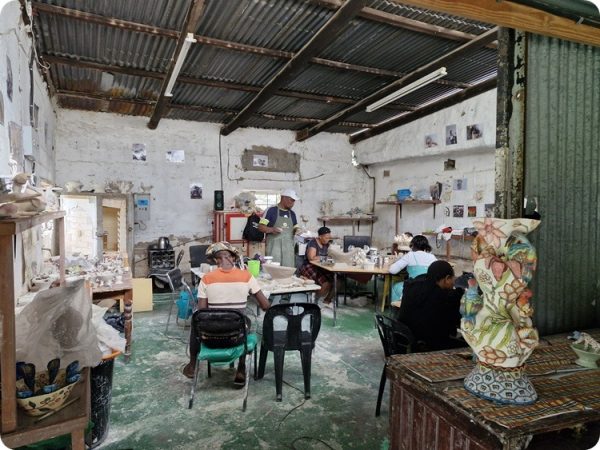
Tour Group at Zimela Ceramics |
| |
Drakensberg Walking Excursions, in partnership with Cathkin Booking & Management Services and Berg Wheels, offers a richly textured cultural tour in the Loskop area, adjacent to the Champagne Valley. This distinctive experience takes visitors beyond the mountains and into the everyday traditions of local craft, creativity and cuisine, providing an engaging encounter with the people and heritage of the Central Drakensberg foothills.
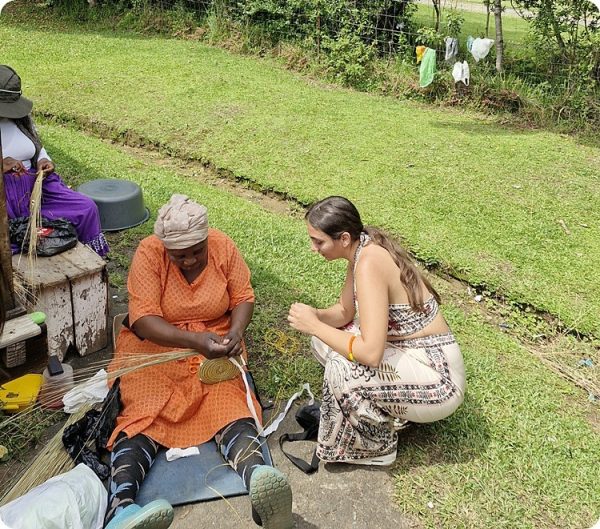
The tour begins with a visit to local basket weavers, whose craft has supported mountain communities for generations. Using grasses, reeds and natural fibres harvested from riverbanks and wetlands, skilled artisans demonstrate techniques once essential for storage, transport and daily household use. Guests learn how materials are gathered, prepared and dyed, and how complex stitching patterns give each basket its strength and character. What began as a practical necessity has become an important expression of identity and a meaningful source of livelihood for many local families.
From the weavers, the journey continues to Zimela Ceramics, where visitors are introduced to the world of hand-crafted pottery that blends African form with contemporary design. A short masterclass allows guests to work with clay, discover shaping techniques and better understand the firing process. This hands-on experience offers a deeper appreciation of the skill, patience and creativity behind every finished piece.
The day concludes with a traditional Shisa Nyama and tavern experience — a lively, informal barbecue and an essential part of South African social life. Meaning “burn the meat,” Shisa Nyama centres on freshly grilled meats enjoyed in a relaxed, communal setting. Guests choose their cuts to be cooked over open coals and enjoy boerewors, lamb chops, beef ribs or chicken, served with pap, chakalaka, salads and traditional accompaniments.
Optional cultural additions can be included, such as scenic helicopter experiences with Berg Air, community visits in Thokozisa, and tastings at Cathedral Peak Wine Estate.
This carefully curated tour offers a rewarding blend of craft, food, creativity and community — a relaxed yet meaningful way to experience the cultural heartbeat of the Drakensberg.
For bookings and enquiries:
WhatsApp James Seymour on 082 925 508
Email: james@cathkinmanagement.com
|
| |
|
Basket weaving at Monks Cowl Camp |
| |
|
A comprehensive list of birds in the Drakensberg has been created using information from various sources, including the Wildlife and Environment Society of South Africa, Birdlife South Africa, and Ezemvelo KZN Wildlife. The plan is to update this list regularly as the names of bird species change and provide a link for all future issues of the Drakensberg Times. The table indicates common and notable bird species in the Drakensberg. Click on the following link - Drakensberg Bird List. |
| |
|
EVENTS in the CATHKIN PARK, WINTERTON and NORTHERN DRAKENSBERG
Winterton parkrun takes place every Saturday morning from the Waffle Hut starting at 08.00. Register on www.parkrun.co.za/winterton Cannibal Cave parkrun, which takes place in the Northern Drakensberg.
Cathkin Park Walking Group takes place every Tuesday. 8.00 in Winter and 7.00 in Summer. Contact Nick 0794936424
Central Drakensberg Hiking Group Saturdays and overnight hikes. Contact James Seymour for details. 0829255508.
Cathkin Park Community Projects Run takes place on the First Friday of the month at 17.00 in Summer and 16.30 in Winter at The Nest. (April to September).
Drakensberg Boys’ Choir School has a concert on Wednesday afternoons during term times www.webtickets.co.za or 0364681012 or 0785118680.
Mountain Music Club takes place on the last Saturday of every month, from 5 pm, usually at Mac’s Café, Cedarwood Shopping Centre. Dave: 0724839049.26th
2025
5th Dec: Carol Service at 18.30 at Winterton Primary School. Organised by One Life Church. Contact Sarah 0788574412
5th – 7th Dec: Christmas in the Berg at the Drakensberg Boys’ Choir School. www.dbchoir.com
13th Dec: Family Movie Night at Berg Air. Gates open 17.00. Movie: Polar Express at !9.00. Roxanne 0794719537
9th Dec: Blood Donations . at Winterton Country Club . 13.00 – 18.00
16th Dec: Christmas Craft Market. Contact Charmaine 0827142903
18th Dec: Cathkin Park Community Carol Service at the Drakensberg Boys’ Choir School Auditorium
Rev John Green: 0824475186
27th Dec: Beloved Long Run (15km or less) at Valley Bakery .06.00. Dean: 0836302423
27th Dec- 1st Jan: Smoking Dragon Festival . Amphitheatre Lodge www.smokingdragon.org
2026
1st Jan: Winterton parkrun at The Waffle Hut at 8.00 Contact 0835652157
1st Feb: Wagondrift Challenge at Wagondrift Dam. Jordon 0729511979
28th Feb: Sterkfontein Challenge at Sterkfontein Dam 3km, 1500m and 500m Swim. https://www.entryninja.com/events/82809-sterkfontein-1500-swim
17th -19thApr: The Oxpecker Ultra www.theoxpecker.co.za
24th – 27th Apr: Music in the Mountains at the Drakensberg Boys’ Choir School. www.webtickets.co.za
0364681012
1st – 3rd May: Yellow billed Oxpecker www.theoxpecker.co.za
8 May: NG Kerk Night Golf at TBS Grounds
8th – 10th May: Red billed Oxpecker www.theoxpecker.co.za
15th – 17th May: African Oxpecker www.theoxpecker.co.za
16th May: Mweni Marathon www.kzntrailirunning.co.za
30th – 31st May: Standard Bank 2-day Berg and Bush https://bergandbush.co.za//
4th -7th Jun: The Standard Bank Berg and Bush Descent. https://bergandbush.co.za//
27th June: Drakensberg Polar Bear Swim at Dragon Peaks
4th - 5th Sept: The Berg Show at VS Agri Grounds R74
10th – 17th Sept: go2sea. Clarens to Ballito www.go2sea.co.za
3rd Oct: Run the Berg at All Out Adventures https://runtheberg.co.za//
23rd – 25thOct: Kudu Canter
Ann Gray
1st December 2025 |
| |
|
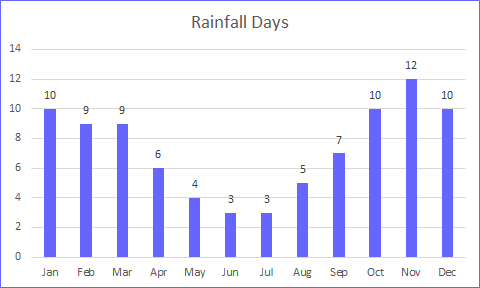
Drakensberg's Weather Charts |
| |
|
Drakensberg Tourism Directory |
| |
|