|
For the Tourism Trade and Visitors to the Drakensberg |
| |
|
Copyright: Cathkin Booking and Management Services
|
| |
|
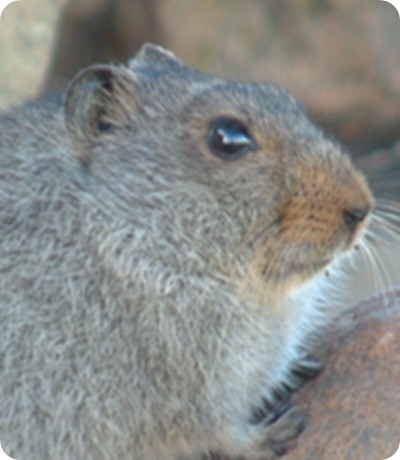
Ice (Sloggett's)Rat (Otomys sloggetti)
Photo: Wikimedia Commons - Public Library of Sciences Journal |
| |
|
Autumn in the South African Drakensberg is a season of stunning beauty and gentle transformation. From March to May, the region transforms into a canvas of warm hues, with shades of gold, orange, and red painting the trees and vegetation. The cool, refreshing air enhances the allure of the outdoors, making it a perfect time for exploration.
Hikers are treated to breathtaking views as they follow trails meandering through ancient forests, alongside cascading waterfalls, and across rugged cliffs. The clear skies of autumn accentuate the dramatic basalt cliffs and rolling hills, creating unforgettable panoramas.
Evenings in the Drakensberg bring a noticeable chill, encouraging visitors to gather around cozy fireplaces in mountain lodges. For stargazers, the night sky reveals a spectacular display of southern hemisphere constellations, untouched by urban lights. Autumn in the Drakensberg is an extraordinary experience, combining natural beauty, adventure, and peacefulness into an unforgettable journey.
|
| |
|
"Autumn carries more gold in its pocket than all the other seasons." — Jim Bishop |
| |
|
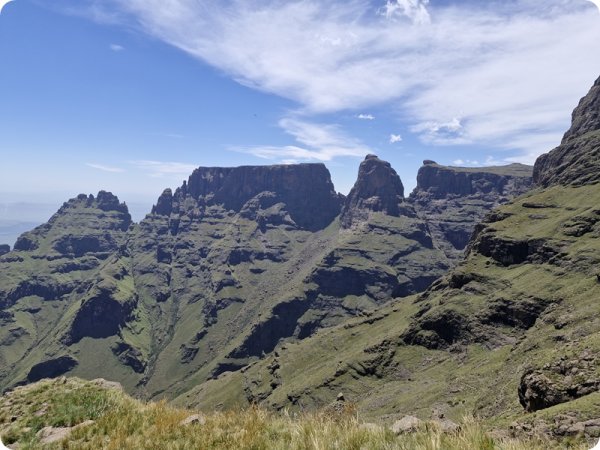
Near the top of Gray's Pass |
| |
|
Contents:
- Drakensberg Ice Rat;
- Gray's Pass;
- Vertical Rush;
- Drakensberg's Endemic Flowers;
- Game Pass Shelter;
- A Drakensberg birding list;
- Drakensberg Events;
- Weather charts;
- Tourism directory
|
| |
|
The Drakensberg Ice Rat (Otomys sloggetti) is a Resilient High-Altitude Rodent. This rodent species is native to the high-altitude regions of southern Africa, particularly in the Drakensberg and Maloti Mountains of Lesotho and South Africa. Unlike most rodents commonly found in forests, grasslands, or underground burrows, this species thrives in an alpine environment where it faces extreme temperatures and limited food sources.
Belonging to the genus Otomys, the Ice Rat has developed unique adaptations to survive in its harsh surroundings. It has a compact, stocky body covered in dense fur that provides insulation against cold temperatures. Unlike many rodents, it does not hibernate, remaining active throughout the year. It often basks in the sun to regulate its body temperature, a behaviour that helps compensate for heat loss in frigid conditions.
This species can be identified by its physical traits. It has a sturdy body with short limbs and a short, furry tail. Its fur is typically greyish-brown, allowing it to blend with the rocky alpine terrain. The Ice Rat has large, rounded ears, which enhance its ability to detect sounds in its mountainous habitat. Its incisors are prominent and well-suited for gnawing on the tough alpine vegetation it consumes. The species also has relatively small eyes, suggesting a greater reliance on senses like hearing and touch.
The Ice Rat is herbivorous, primarily feeding on grasses, sedges, and other alpine plants. Due to the nutrient-poor conditions of its habitat, it has a high metabolic rate and needs to consume large amounts of food daily. It is a social species, forming small colonies and living in burrows dug into soft soil or rocky crevices.
Despite its specialized adaptations, the Ice Rat faces climate change and habitat destruction threats. Rising temperatures may disrupt its fragile ecosystem, affecting food availability and shelter. Conservation efforts are crucial to maintaining the biodiversity of Africa’s high-altitude regions. Studying Otomys sloggetti provides valuable insights into how mammals adapt to extreme environments.
|
| |
|
The 'Rosetta Panel', Game Pass Shelter |
| |
|
The Central Drakensberg’s Gray’s Pass Hike is a demanding yet rewarding three-day journey through one of South Africa’s most stunning mountain landscapes. This trek combines physical endurance with breathtaking scenery, offering an unforgettable experience for adventurous hikers.
Day 1: From Monks Cowl to Keith Bush Camp
The hike begins at Monks Cowl Camp, a popular starting point for exploring the Drakensberg. The first leg follows the Sphinx Trail, winding through lush vegetation and past striking rock formations. As hikers ascend to Hlatikhulu Nek, they are treated to sweeping views of the surrounding valleys.
From Hlatikhulu Nek, the trail descends into the tranquil Mhlwazini Valley, where running water and rustling grass accompany the journey. The final stretch requires a steady climb to Keith Bush Camp, a remote site at the base of dramatic cliffs. Hikers are rewarded with stunning views of Gatberg, Dragon’s Back, Mhlwazini Peak, Monks Cowl, Cathkin Peak, Sterkhorn North and South, the Turret, and Amplet. Covering 13 kilometres and gaining over 1000 meters in elevation, this stage is physically demanding, typically taking around six hours to complete. Upon reaching Keith Bush Camp, hikers can relax under a vast canopy of stars.
Day 2: Scaling Gray’s Pass
The second day is the most challenging, featuring a steep ascent up Gray’s Pass. Although the climb is only 2.4 kilometres, the elevation gain of nearly 1000 meters makes it particularly strenuous. The landscape transforms into a rugged, high-altitude wonderland as hikers push upwards.
Reaching the summit of Gray’s Pass is a significant achievement. The top offers panoramic views of the Drakensberg’s jagged peaks and sprawling valleys, including breathtaking sights of Gatberg, Dragon’s Back, Mhlwazini Peak, Monks Cowl, Cathkin Peak, Sterkhorn North and South, the Turret, and Amplet. After taking in the scenery, hikers face a steep and eroded descent, which often proves more challenging than the ascent. The return to Keith Bush Camp marks the end of an exhausting but fulfilling day.
Day 3: The Journey Home
The final day retraces the route back to Monk's Cowl Camp. While the landscape remains familiar, the descent offers new perspectives on the natural beauty of the Drakensberg. Though fatigue sets in, the sense of accomplishment and the breathtaking surroundings provide ample motivation to complete the journey.
Preparing for the Challenge
Gray’s Pass Hike is not for the unprepared. It requires high physical fitness, mental resilience, and careful planning. Essential gear includes sturdy hiking boots, a reliable backpack, and weather-appropriate clothing. Hikers should also carry enough water, energy-rich snacks, and a first-aid kit. It is highly recommended that those who take this route use an experienced and registered mountain hiking guide to ensure safety and enhance their experience.
Why Take on Gray’s Pass?
Gray’s Pass Hike is a transformative experience for those seeking adventure. It presents an opportunity to push personal boundaries, immerse in nature, and create lasting memories. The dramatic landscapes of the Central Drakensberg serve as both a challenge and a reward, making this hike an unforgettable journey for those willing to conquer its heights. |
| |
|
Keith's Bush Camp near the base of Gray's Pass |
| |
|
Click on the above image for a larger version of the route map. |
| |
|
Vertical Rush Adventure: A Thrilling Experience in the Drakensberg |
| |
|
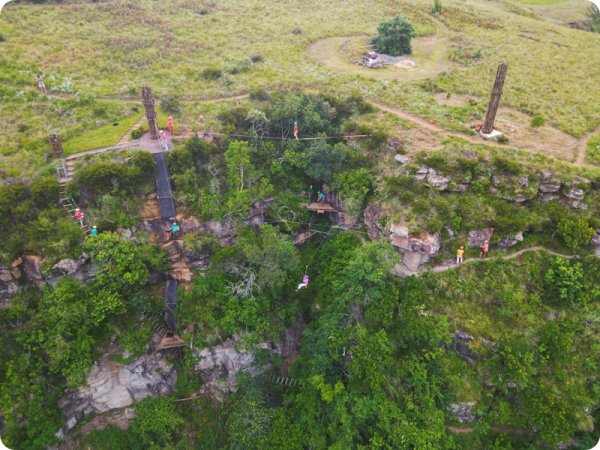
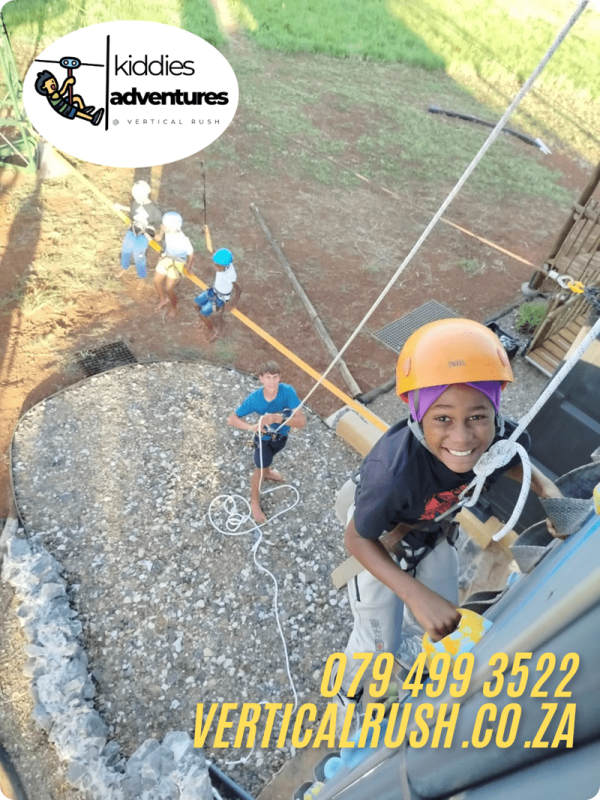
Nestled in the scenic Champagne Valley or Winterton's suburb of Cathkin Park, Vertical Rush is a premier adventure venue in the Central Drakensberg. Designed for adrenaline seekers and outdoor enthusiasts, this operation offers a unique blend of thrilling activities set against the breathtaking backdrop of South Africa’s famous mountain range.
The brainchild of the hardworking and innovative Saaiman family—Jakes, Cornelia, Dawid, and Nina—Vertical Rush is a testament to their passion for adventure tourism. The Saaimans have successfully developed this attraction alongside two other ventures: Drakensberg Scootours, which offers exhilarating downhill scooter rides, and a popular white-water tubing operation that takes adventurers through the region’s scenic rivers. Their dedication to providing top-tier outdoor experiences has helped make the Champagne Valley a hub for adventure tourism.
A highlight of the Vertical Rush experience is its via Ferrata, an assisted climbing route that allows participants to ascend steep rock faces using fixed cables, ladders, and handholds. This feature makes climbing accessible even to those without prior experience, providing a safe yet exhilarating way to explore the rugged terrain. Stretching across approximately 300 meters, the via Ferrata route winds through indigenous forests and rocky cliffs, offering climbers spectacular panoramic views of the surrounding valleys and peaks.
Beyond the via Ferrata, Vertical Rush boasts a variety of adventure activities that cater to different thrill levels. Participants can challenge themselves with abseiling, where they descend sheer rock faces using a rope system, or test their balance on high slacklines. The king swing, one of the most exhilarating attractions, lets adventurers experience a pendulum drop that sends them soaring through the air. Each activity is designed to push personal limits while immersing visitors in the natural beauty of the Drakensberg.
The Saaiman family’s contributions to the region go beyond adventure tourism. Their deep connection to the Champagne Valley is reflected in their willingness to assist during local emergencies, whether it be floods, bushfires, or other crises. Their strong community spirit and hands-on approach have made them successful entrepreneurs and valued members of the valley’s close-knit community.
Safety remains a top priority at Vertical Rush, with all equipment meticulously maintained and participants given thorough safety briefings. Trained guides ensure that every adventurer, regardless of skill level, can confidently enjoy the experience. Conveniently located near lodges and hotels in Champagne Valley, this adventure hub offers an unforgettable experience for anyone looking to combine excitement with nature in one of South Africa’s most stunning landscapes. |
| |
|
Drakensberg's Endemic Flowers
|
| |
|
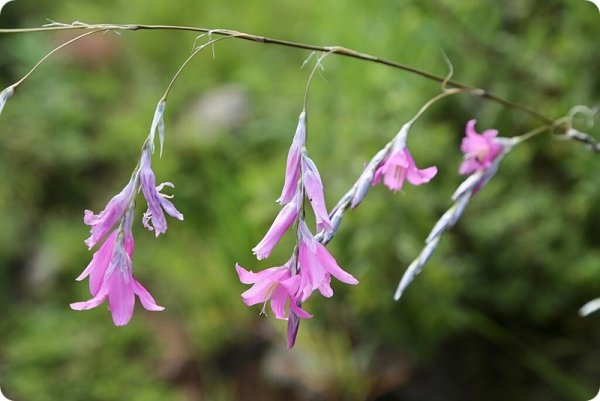
Drakensberg Bell. Wikimedia Commons: Dr Alexey Yakovlev |
| |
|
The Drakensberg mountains, part of a UNESCO World Heritage Site, are home to a stunning diversity of endemic flowers. The unique high-altitude environment and montane grasslands support many plant species found nowhere else. Here is a list of some endemic or near-endemic flowers of the Drakensberg region:
Drakensberg Endemic Flowers:
Drakensberg Bell (Dierama dracomontanum) – A graceful, grass-like plant with pink or purple pendulous bell-shaped flowers.
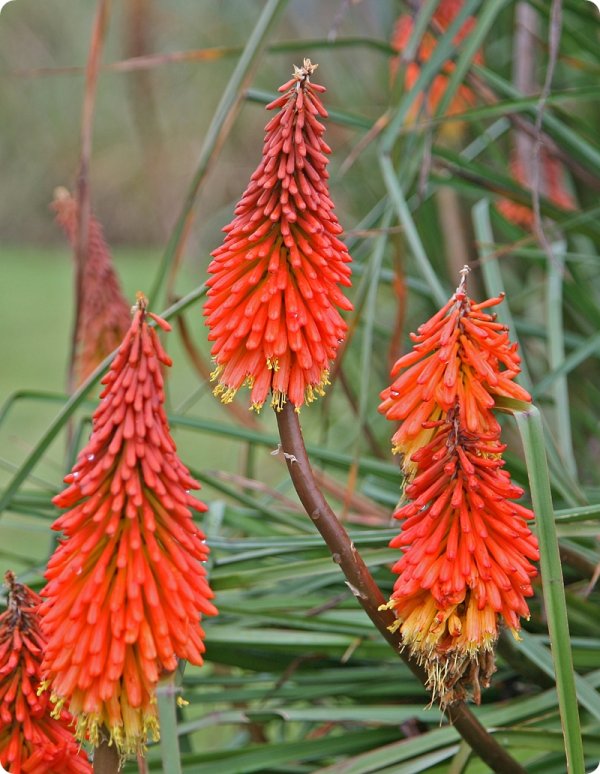
Stemmed Red-hot Poker (Kniphofia caulescens) – A striking red-hot poker with tall spikes of tubular orange to yellow flowers.
Drakensberg Groundsel (Senecio drakensbergensis) – A bright yellow, daisy-like flower thriving in montane grasslands.
Gladiolus symonsii – A rare, beautiful gladiolus restricted to the Drakensberg.
Hesperantha woodii – A delicate flower with vibrant blooms, found in moist grasslands.
Helichrysum pagophilum – A high-altitude everlasting flower, genuinely unique to the region.
Protea nubigena – An extremely rare protea found exclusively on a high ridge in the Royal Natal section of the park.
Syncolostemon macranthus – The Long-flowered Pink Plume is endemic to the Northern Drakensberg.
Near-Endemic Flowers of the Drakensberg
Aloe polyphylla (Spiral Aloe) – Native to the high-altitude regions of the Drakensberg and Lesotho, not restricted to the Drakensberg itself.
Gladiolus longicollis subsp. dracomontanus is a subspecies of gladiolus found primarily in the Drakensberg, but extends slightly beyond.
Aloe nubigena – A rare aloe species that grows in the Drakensberg but also occurs in nearby regions.
Kniphofia brachystachya – A unique red-hot poker species with a distribution that extends beyond the Drakensberg.
Helichrysum cooperi – A delicate yellow everlasting flower, primarily found in the Drakensberg but occurring in surrounding areas.
Thamnocalamus tessellatus (Berg Bamboo) – Occurs in the Drakensberg but also found in nearby regions of Lesotho.
Conservation Status
Many of these plants are threatened by habitat loss due to overgrazing, agriculture, and invasive alien plants. Conservation efforts, including preserving montane grasslands and implementing sustainable land management practices, are vital for protecting these endemic species.
|
| |
|
Stemmed Red Hot Poker: Wikimedia Commons: W.Bulach |
| |
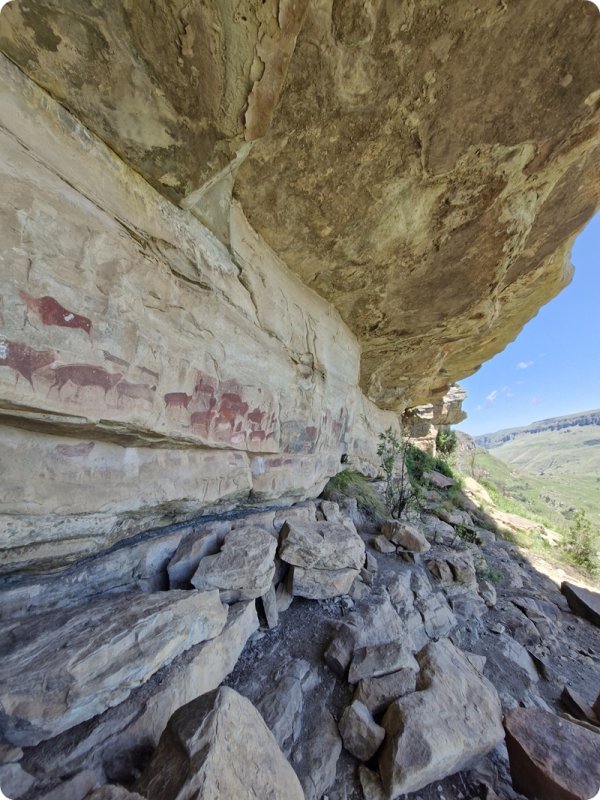
The Game Pass Shelter and the Kamberg Rock Art Centre are located within the Kamberg Nature Reserve in South Africa’s KwaZulu-Natal Midlands. Recognized as one of the most significant San rock art sites, the Game Pass Shelter is often called the "Rosetta Stone" of San rock art interpretation. It provides invaluable insights into the spiritual beliefs and cultural expressions of the San people, particularly their deep connection with the eland, a large antelope species central to their spiritual and ritualistic practices.
The Game Pass Shelter and the Kamberg Rock Art Centre, along with the Kamberg Nature Reserve, form part of the Maloti-Drakensberg UNESCO World Heritage Site. This designation is primarily due to the presence of approximately 30,000 examples of San rock art within the Drakensberg mountains, many of which date back thousands of years. The paintings at Game Pass Shelter vividly depict the San people's belief in the spiritual power of the eland and the ability of a dying eland to transfer its energy to a shaman, aiding them in entering the spiritual realm.
Visitors to the Kamberg Rock Art Centre gain a comprehensive understanding of the region’s rock art, learning about the traditional painting techniques and the cultural significance of these artworks. The centre serves as an educational hub, highlighting indigenous San rock art's artistic and historical importance while fostering appreciation for their way of life.
The journey to the Game Pass Shelter is an immersive experience in itself. Accessible via an eight-kilometre scenic hike through the Kamberg Nature Reserve, the route takes about three hours and includes a total elevation gain of 338 meters. Along the way, hikers pass through the Waterfall Cave, which features faded examples of San rock art and are rewarded with breathtaking mountain views and cascading waterfalls.
The rock paintings at the shelter provide an extraordinary glimpse into the San people's perception of the natural world. The detailed depictions of elands and trance rituals reflect their belief in the interconnectedness of the physical and spiritual realms. Anthropologists such as David Lewis-Williams have used the Game Pass Shelter to decipher the meaning behind San rock art, particularly the shamanic trance rituals that involved altered states of consciousness, essential to San healing and spiritual practices.
Please note that visitors are required to make use of a registered tour guide to visit the shelter. Guided tours led by registered experts ensure visitors gain an informed perspective on the site's rich history and cultural heritage. More than just an archaeological site, Game Pass Shelter is a crucial link to understanding humanity’s ancient artistic expressions and spiritual traditions, making it a profoundly educational and enlightening experience. Drakensberg Walking Excursions is an example of a professional guiding operation which will ensure such an experience.
|
| |
|
Side view of the 'Eland Panel', Game Pass Shelter |
| |
|
A comprehensive list of birds in the Drakensberg has been created using information from various sources, including the Wildlife and Environment Society of South Africa, Birdlife South Africa, and Ezemvelo KZN Wildlife. The plan is to update this list regularly as the names of bird species change and provide a link for all future issues of the Drakensberg Times. The table indicates common and notable bird species in the Drakensberg. Click on the following link - Drakensberg Bird List. |
| |
|
EVENTS in the CATHKIN PARK, WINTERTON and NORTHERN DRAKENSBERG
Winterton parkrun takes place every Saturday morning from the Waffle Hut starting at 08.00. Register on www.parkrun.co.za/winterton Cannibal Cave parkrun, which takes place in the Northern Drakensberg.
Cathkin Park Walking Group takes place every Tuesday. 8.00 in Winter and 7.00 in Summer. Contact Nick 0794936424
Central Drakensberg Hiking Group Saturdays and overnight hikes. Contact James Seymour for details. 0829255508.
Cathkin Park Community Projects Run takes place on the First Friday of the month at 17.00 in Summer and 16.30 in Winter at The Nest. (April to September).
Drakensberg Boys’ Choir School has a concert on Wednesday afternoons during term times www.webtickets.co.za or 0364681012 or 0785118680.
Mountain Music Club takes place on the last Saturday of every month, from 5 pm, usually at Mac’s Café, Cedarwood Shopping Centre. Dave: 0724839049.
25th – 28th April: Music in the Mountains. At the Drakensberg Boys’ Choir School. www.dbchoir.com.
2nd - 4th May: Yellow-billed Oxpecker www.oxpecker.co.za
3rd May: Mweni Mountain Marathon Mweni Cultural Centre www.kzntrailrunning.co.za.
9th – 11th May: Red-billed Oxpecker www.oxpecker.co.za.
11th May: Bushman Trail Run: 5km, 10km, 20km and 30km Wagondrift Dam Estcourt.www.kzntrailrunning.co.za.
16th – 17th May: Vine and View. Drakensberg Wine Escape at Ardmore Guest Farm. 0762670969.
16th - 18th May: African Oxpecker www.oxpecker.co.za.
16th – 18th May: Berg Birding with Andrew Weaver. Cavern Berg Resort.0837015724.
31st May - 1st June: Berg and Bush 2 day. Emseni Camp www.bergandbush.co.za.
6th June- 8th June: Berg and Bush Descent www.bergandbush.co.za
13th - 16th June: Hot Air Balloon Festival with Night Glow on 14th June. Hannes 0825512592
28th June: Drakensberg Polar Bear Swim Challenge at Dragon Peaks, Belinda 0797377282
15th – 17th July: Adventure Reflections. Northern Drakensberg Venue TBC
9th Aug: Ntabamoya Trail Run www.kzntrailrunning.co.za
5th - 6th Sept: The Berg Show at VS Agri Grounds R74 Joanine 0828564368
11th -15th Sept: Fibre Festival at Ardmore Guest Farm 0762670969
19th – 21 Sept: Berg Birding with Andrew Weaver. Cavern Berg Resort.0837015724
4th Oct: Run the Berg. All Out Adventures www.runtheberg.co.za
25th – 26th Oct: Kudu Canter contact tamsyn@kuducanter.co.za
Ann Gray
|
| |
|
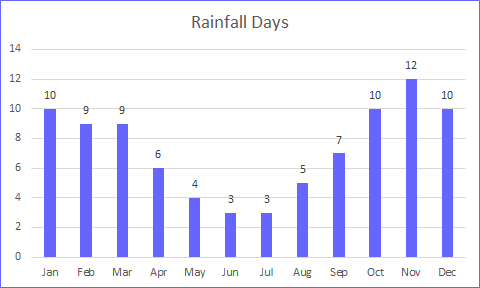
Drakensberg's Weather Charts |
| |
|
Drakensberg Tourism Directory |
| |
|